The Indian Ocean Bridge: India–Mozambique Trade, Decoded
India is now Mozambique's biggest export market. But a relationship worth almost $4bn a year rests on a handful of commodities. What flows each way, who gains, and where the next decade of value lies.
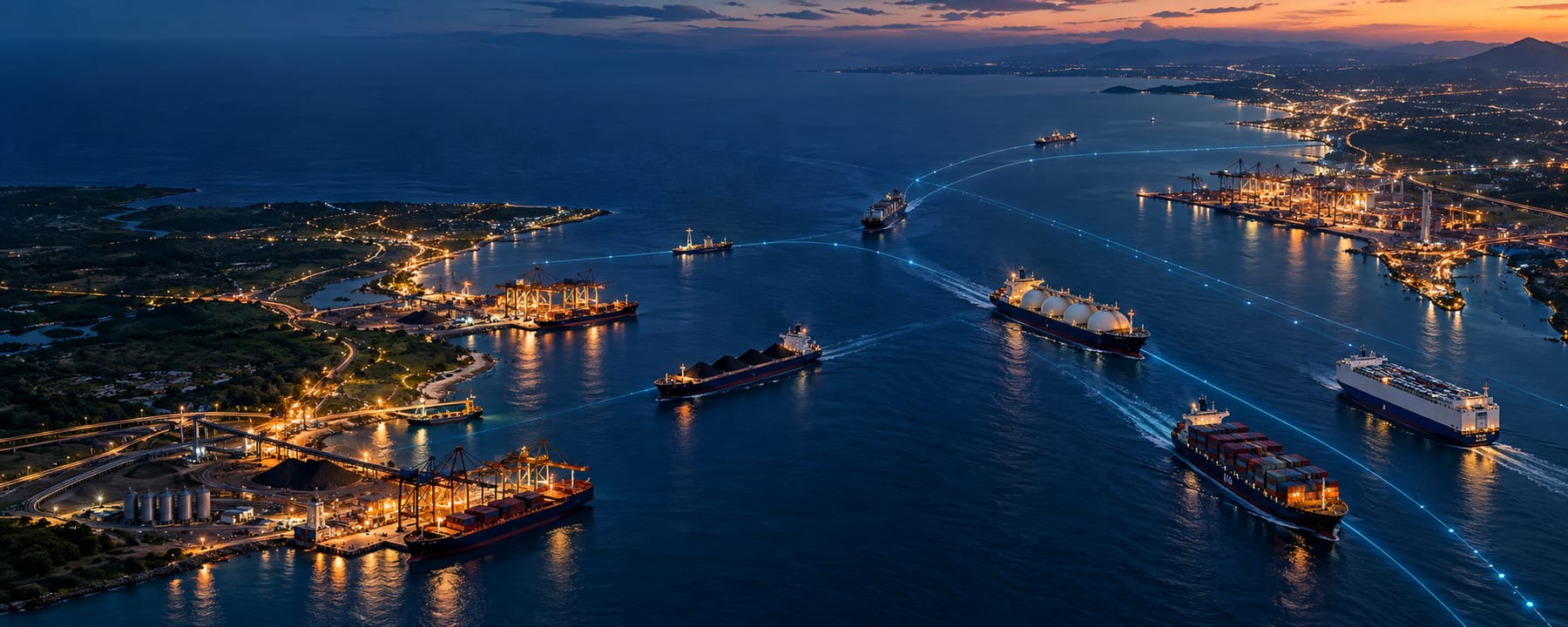
Two economies joined by an ocean — and by coal
Few relationships in Africa are as old, or as lopsided in what they trade, as the one between India and Mozambique. Gujarati merchants were shipping cloth and beads to Ilha de Moçambique long before the Portuguese arrived. Today the cargo is coking coal, natural gas and pigeon peas going east, and diesel, rice and medicines coming west.
The headline is flattering: India has overtaken China and South Africa as Mozambique's biggest customer. The detail is less comfortable. Three-quarters of what India buys is a single category — coal and gas — and the trade total has fallen by a quarter from its 2022-23 peak. This article maps the flows, the investment behind them, and where both countries could build something more durable.
A boom, a bust, and a quiet recovery
Indian customs data show bilateral trade rising more than two-and-a-half times, from $1.9bn in 2020-21 to a peak of just over $5bn in 2022-23, as coal prices spiked after Russia's invasion of Ukraine and Indian steelmakers scrambled for coking coal. As prices normalised, so did the totals: trade fell to $3.4bn in 2024-25 before recovering to $3.8bn in 2025-26.
The balance has also flipped. In 2020-21 India ran a $600m surplus, selling far more than it bought. Since 2022-23 the surplus has been Mozambique's — about $790m in 2025-26 — because Indian exports of fuel and food fell faster than Indian demand for Mozambican coal and gas.
Mozambique now sells India almost $1.50 for every dollar it buys from it. Five years ago, the ratio ran the other way.
What each country actually sells the other
Mozambique → India: energy first, food second
In 2025, mineral fuels — overwhelmingly coking coal from Tete, plus LNG cargoes from the Coral Sul floating plant — accounted for about $1.56bn of India's $2.1bn imports from Mozambique. The second line is far smaller but politically important: about $313m of "edible vegetables", mostly dried pigeon peas and other pulses grown by smallholders in Nampula, Zambézia and Niassa. Steel scrap, cashew nuts, gemstones and timber make up the tail.
India → Mozambique: fuel, rice and medicines
India's $1.36bn of exports are more diverse. Refined petroleum products lead at about $637m. Then come rice and other cereals ($157m), pharmaceuticals ($128m), machinery, vehicles — Tata, Mahindra and TVS are household names — and railway rolling stock, much of it financed by Indian lines of credit.
The asymmetry matters. Mozambique sells India raw materials whose prices are set in global markets; India sells Mozambique manufactured goods and services where brand, credit and after-sales support decide market share.
India's place in Mozambique's trade league table
Central-bank balance-of-payments data for 2024 put India at the top of Mozambique's export markets, buying $1.47bn of goods — just ahead of China ($1.35bn) and South Africa ($1.21bn).
On the import side the picture is reversed. South Africa supplies a quarter of everything Mozambique buys, from electricity to cars; China is second. India is a distant third at about $570m — a reminder that Indian exporters have room to grow in a market where Indian brands are already familiar.
The investment layer: gas, coal, rails and roads
Trade figures understate India's stake. Indian state companies paid more than $5bn in 2014 for 20% of the Area 1 gas block that TotalEnergies is now developing, adding to Bharat PetroResources' 10% held since 2008. Together, Indian firms own 30% of the Area 1 block that is building Mozambique LNG — the single largest national stake in the project.
In coal, a consortium of five Indian public-sector companies bought Rio Tinto's Mozambican assets in 2014, and in 2021 the Jindal group's Vulcan acquired the Moatize mine and the 920km Nacala rail-and-port corridor from Vale for a combined $270m. India's Exim Bank has financed roads, water, power and rolling stock through concessional lines of credit.
Five gaps worth closing
Process before you ship
Raw cashew and pulses leave Mozambique unprocessed and are cleaned, split and packed in India. Shelling, grading and dal milling in Nampula would keep margin — and jobs — at home.Medicines made locally
A 2024 agreement recognising the Indian Pharmacopoeia eases registration of Indian medicines. The next step is local packaging and formulation for the wider SADC market.Rail and logistics
Indian rolling stock already runs on Mozambican lines. Maintenance depots, spares and training are a natural follow-on for Indian engineering firms.LNG offtake from 2029
With 30% of Area 1, Indian buyers will have rights to a large share of Mozambique LNG's 13 mtpa. That could double the value of bilateral trade in the early 2030s.A modern trade agreement
The bilateral trade agreement dates from 1982; a new draft has been under discussion since 2009. Updating it — with rules on services, standards and investment — is overdue.From commodity trade to a real partnership
For the next three years the relationship will be governed by coal prices and Indian steel demand. From 2029, LNG changes the scale: Indian-owned Mozambican gas flowing to Indian terminals could push bilateral trade well beyond its 2022-23 record.
The risk is that scale arrives without depth — more tonnes, the same narrow basket. The opportunity is that both governments now have reasons to build processing, pharmaceuticals, logistics and skills on top of the commodity base. For Mozambican and diaspora businesses that sit between the two markets, that middle layer is where the margin will be.
Note on data: Indian customs (DGCIS) figures use India's April–March fiscal year; Bank of Mozambique and UN Comtrade figures use calendar years and different valuation, so totals differ by source.
Sources
This report draws on 7 cited sources. View them in Sources cited in every report →
Related insights
 Report
The Quiet Majority: Why Mozambique's Small Firms, Not Its Megaprojects, Will Decide Its Jobs Future
New FinScope data show Mozambique's micro, small and medium enterprises involve 9.3 million people and turn over about 341 billion meticais a month. A critical reading of the numbers — and of a growth model that has bet on megaprojects that employ thousands while small firms carry millions.
 Report
AI Without Industrialisation: Can Africa Leapfrog the Traditional Development Model?
Artificial intelligence promises productivity without factories. We built an original model of job exposure across banking, education, retail, logistics and public administration in Mozambique — and found that the binding constraint is not the algorithm, but electricity, connectivity and paper.
 Report
The Oilseed Corridor: Can Nampula Help Fill India's Cooking-Oil Gap?
On 2 October India's oil industry and the governor of Nampula signed up to explore an oilseed corridor through Nacala. India imports 16 million tonnes of vegetable oil a year; Mozambique sends it almost none. We run the numbers on what the deal could — and could not — achieve.