Two Dreams, One Coastline: Why Mozambique's LNG Raced Ahead of Tanzania's
Both countries struck giant gas fields within months of each other around 2010, on either side of the Rovuma river. Sixteen years later Mozambique exports LNG and is building three more plants, while Tanzania's $42bn project still awaits its signature. What explains the gap — and could it close?
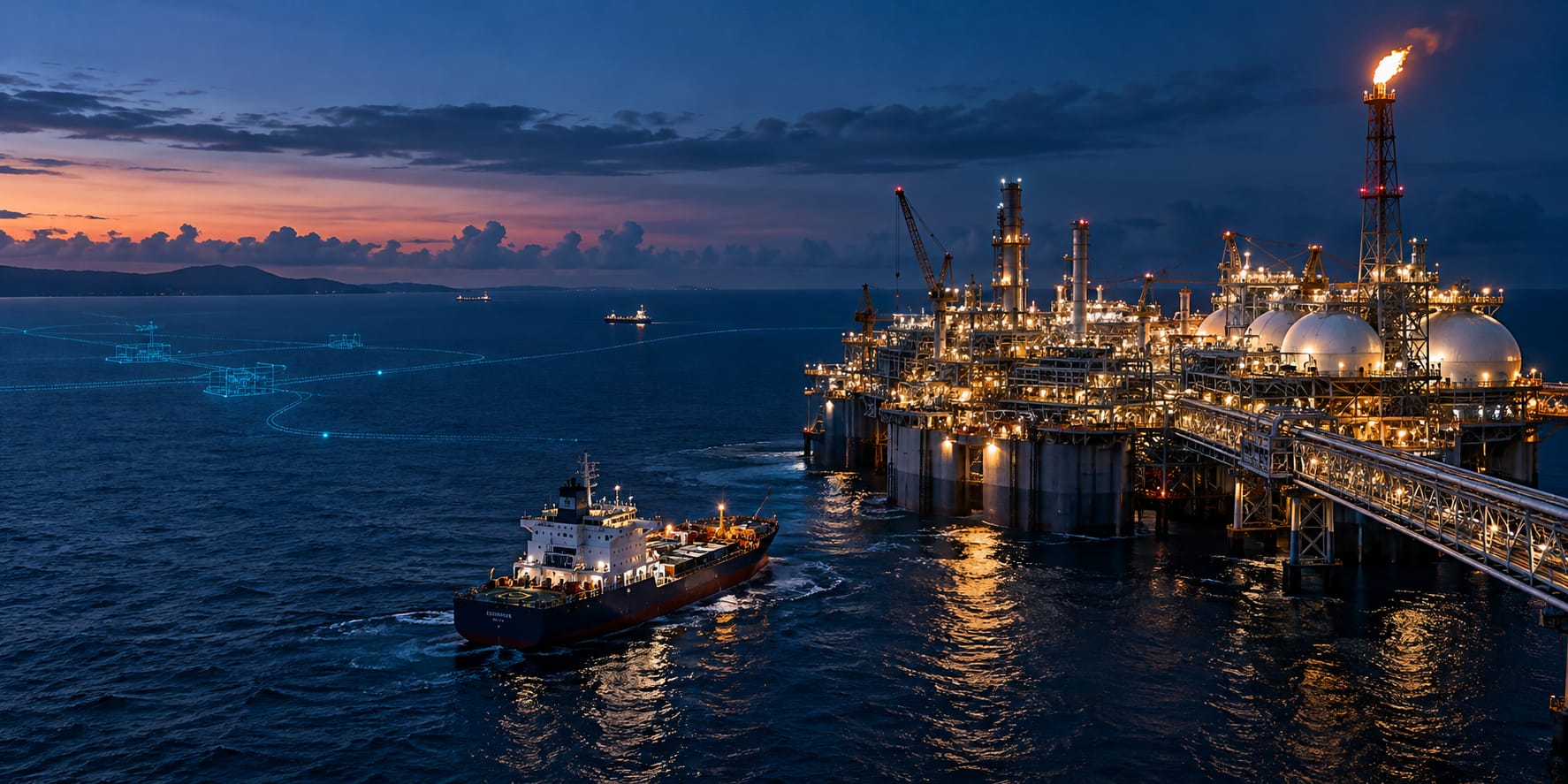
The same geology, very different outcomes
Between 2010 and 2012, explorers made some of the largest gas discoveries of the century in the deep water off East Africa. Anadarko and Eni struck the giant fields of Mozambique's Rovuma Basin; BG Group, Statoil (now Equinor) and ExxonMobil found major reserves a few hundred kilometres north, off southern Tanzania. Both governments promised transformation.
Mozambique has shipped LNG since 2022 and has three more projects under way. Tanzania's onshore LNG plant at Lindi, now priced at $42bn, has been "about to be signed" for a decade. This article compares the two paths and asks what Tanzania's delay means for Mozambique — and for the region.
The numbers side by side
Geology explains part of the gap. Mozambique's Rovuma Basin holds more than 5 trillion cubic metres, about three times Tanzania's estimated 54–57 trillion cubic feet. Larger, more concentrated fields support more trains and better economics.
But geology does not explain everything. Tanzania's resources — more than 47 tcf would be developed by the planned project — are large enough for a world-scale LNG plant. The difference lies in policy, timing and the choices companies made about where to spend first.
Four reasons Mozambique moved first
1. A special legal regime
Mozambique passed dedicated legislation for the Rovuma Basin LNG projects, giving investors fiscal and regulatory certainty early. Tanzania's negotiations dragged on through successive frameworks.2. Resource-nationalist laws in Tanzania
In 2017 Tanzania passed laws asserting permanent sovereignty over natural resources and allowing renegotiation of contracts, which unsettled the companies at the moment they were deciding where to invest.3. Floating LNG as a fast track
Eni's Coral Sul floating plant, approved in 2017, let Mozambique export from 2022 without waiting for an onshore mega-project — proving the basin and generating revenue early.4. Scale attracts scale
With TotalEnergies, ExxonMobil, Eni and Asian state companies all committed, Mozambique became a basin where infrastructure, contractors and buyers could be shared. Tanzania had to compete for capital against it.Mozambique paid a different price: the Cabo Delgado insurgency, which froze Mozambique LNG from 2021 to 2026 and still dominates its risk profile. Tanzania has had stability but not speed.
Tanzania's second chance
In January 2026 Tanzania's energy minister said commercial negotiations had closed and the government expected to sign the agreement for the $42bn Tanzania LNG project before June 2026. The consortium is led by Equinor and Shell, with ExxonMobil, Pavilion Energy, Medco Energi and the state Tanzania Petroleum Development Corporation. In June the host government agreement was still described as close to signature; production would begin about eight years after it is signed, around 2034.
The context has shifted in Tanzania's favour. In August 2026 Equinor said the case for the project had improved following the Middle East conflict, as buyers look for supply that avoids the Gulf's chokepoints — the same argument that has helped Mozambique.
- 2010–2012Major discoveries off both countries.
- 2017Coral Sul approved in Mozambique; Tanzania passes resource-sovereignty laws.
- 2019Mozambique LNG final investment decision.
- 2022Coral Sul begins exports; Tanzania signs a framework agreement for its LNG project.
- Jan 2026Mozambique LNG fully restarts; Tanzania aims to sign its $42bn deal by June.
- ~2034Earliest Tanzanian LNG production on current plans.
What Tanzania's delay means for Mozambique
In the short term, Tanzania's delay has been Mozambique's gain: buyers, contractors and financiers concentrated on one East African LNG story. In the long term, the two countries are more partners than rivals. They share a border along the Rovuma river, a security problem — the insurgency has spilled across into Tanzania's Mtwara region — and an interest in making East Africa a credible, diversified LNG supply hub for Asia and Europe.
- Shared supply chains. Fabrication yards, training centres and logistics bases in Pemba and Mtwara could serve both countries' projects.
- Market timing. Tanzanian volumes arriving after 2034 would follow Mozambique's build-out rather than compete with it for contractors.
- Security cooperation. Joint border security around the Rovuma is a precondition for both.
Sources
This report draws on 7 cited sources. View them in Sources cited in every report →
Related insights
 Report
The Quiet Majority: Why Mozambique's Small Firms, Not Its Megaprojects, Will Decide Its Jobs Future
New FinScope data show Mozambique's micro, small and medium enterprises involve 9.3 million people and turn over about 341 billion meticais a month. A critical reading of the numbers — and of a growth model that has bet on megaprojects that employ thousands while small firms carry millions.
 Report
AI Without Industrialisation: Can Africa Leapfrog the Traditional Development Model?
Artificial intelligence promises productivity without factories. We built an original model of job exposure across banking, education, retail, logistics and public administration in Mozambique — and found that the binding constraint is not the algorithm, but electricity, connectivity and paper.
 Report
The Oilseed Corridor: Can Nampula Help Fill India's Cooking-Oil Gap?
On 2 October India's oil industry and the governor of Nampula signed up to explore an oilseed corridor through Nacala. India imports 16 million tonnes of vegetable oil a year; Mozambique sends it almost none. We run the numbers on what the deal could — and could not — achieve.